

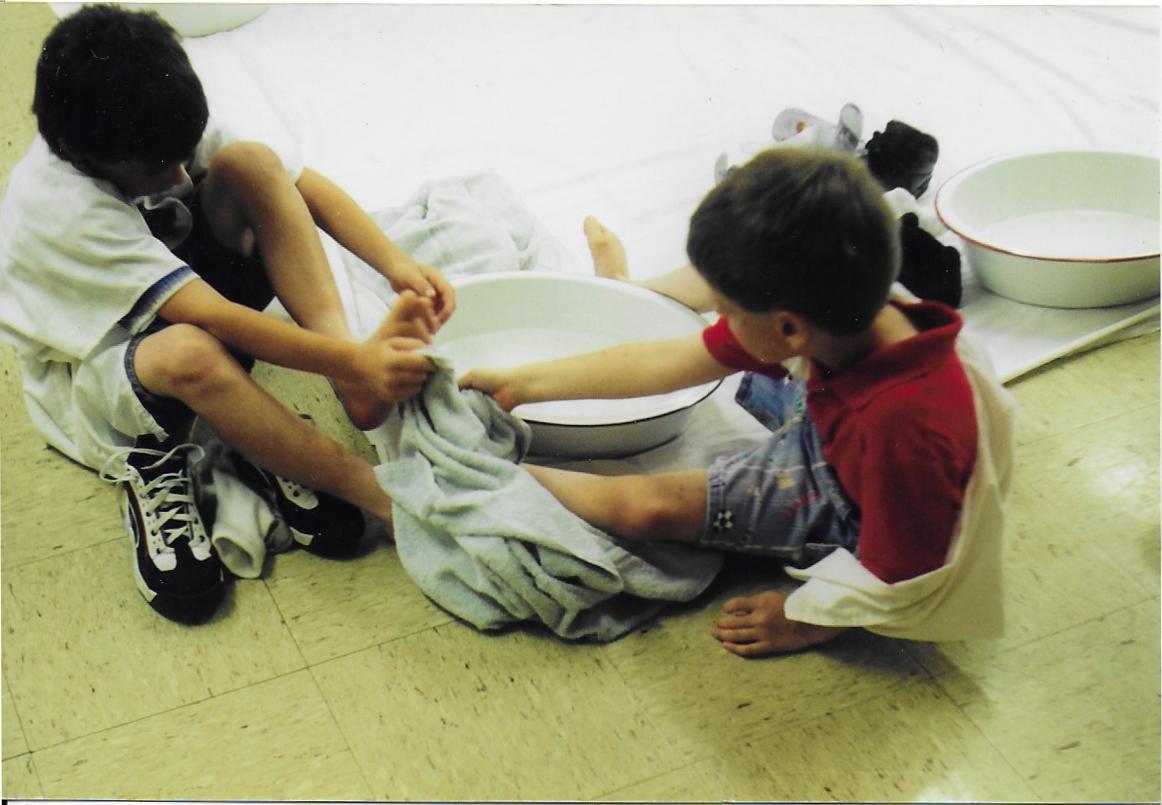
Promoting Inclusion with Peers
Nurturing Belonging with Neurodiverse People
Sunday school teachers, youth leaders, and other adults have a vital role to play in promoting understanding and acceptance of neurodiverse children and youth in faith communities. Children reflect what they observe. Adults can model acceptance when responding to words and actions: be open to a new way of thinking and flexible when tradition is challenged.
Modeling Inclusion
Adults:
- Teach, don’t punish. Assume that unwanted behaviors stem from a place of ignorance, not malice. People with autism and other forms of neurodivergence have a hard time learning social cues or expectations unless someone explains them directly. If someone is not acting in line with your expectations, take a moment to clearly explain those expectations.
- Example: Instead of: “You need to respect the teacher,” say: “In this classroom, we respect someone when they are talking. Respect means we use our eyes to look toward the person who is talking, our mouths stay silent, and our hands and feet are silent. Doing this shows the person who is talking that we want to hear what they say.”
- Example: Instead of: “Be nice,” say: “We do not have enough red markers for everyone to have one, so we will have to share. If you want a marker that someone else is using, you can say, ‘marker, please,’ and that person will give you the marker when they are done.”
- Do not Embarrass. When possible, have disciplinary conversations privately, not in the presence of peers. Yelling or reprimanding a student in front of their peers will result in the student feeling isolated and the other students assuming it is acceptable for them to talk disrespectfully to the neurodivergent student when they are upset.
- Speak Kindly. Avoid speaking negatively about neurodivergent students, even when they are not around. Neurotypical students will model how they treat a student based on how they see you talk to and about them. By modeling respect, you are shaping the way the neurodivergent student’s peers will treat them.
Educate Peers:
- Invite peers to list positive traits or interests of the neurodiverse student so they can identify places of connection.
- Explain the main characteristics of the neurodivergent student. You can use a picture book or invite the student to educate their peers on their experience.
- Give specific suggestions for positive interaction with the neurodiverse student:
- Encourage and explain to your friend how they can join your activities: they may be unsure of how to join on their own.
- Be clear when you are talking with them. Use words and body language, because facial expressions might be hard for your friend to notice or understand.
- Explain what is happening when your friend does not understand.
- Engage your friend in conversation by asking questions about something they are interested in.