

Large Conferences and Events: A Guide for Planning Accessible Gatherings
Key Areas to Consider when Choosing a Location and Venue
Physical Accessibility on Site
- What are the transportation options to get to the venue?
- What are the distances within the venue for meetings, meals, lodging, etc.?
- Can a person using a wheelchair or scooter navigate the terrain?
- Is wheelchair or scooter rental available?
- Are ramps and elevators available as alternatives to stairs and escalators? Are they located conveniently and well-marked? Are they able to be used without assistance?
Overnight Accommodations
- Is there enough accessible parking?
- Are wheelchair accessible rooms available?
- Roll-in showers, accessible toilets and sinks, adequate grab bars, shower seats
- Turning radius in all areas of private rooms for power wheelchair maneuverability
- Accessible temperature control in private rooms
- Are there wheelchair accessible bathrooms in all public areas?
Dietary Options
Is the catering or food provider willing to work with you to avoid these common food allergens and sensitivities?
- Peanuts
- Tree nuts
- Fish
- Shellfish
- Milk/Dairy
- Soy
- Egg
- Red Dye #40
- Gluten
Reserving Meeting Spaces
- Are there places for parents with infants to view/hear the meeting?
- Is there wheelchair seating and accessibility for:
- Meal times?
- Meetings?
- Large-group gatherings?
- Is there a location for sign language interpretation that allows for easy viewing?
- Is there a space that can be designated as a “Sensory Room” for those needing a break from noise and over-stimulation?
- Note: for adults, this can be a designated “Prayer Room” or “Quiet Place.”
Accessibility Services/Information Booth
- How will people with disabilities ask for help or services during the event?
- Information booth location and set-up:
- Central location
- Clear and visible signage
- Always staffed
- Equipped with:
- Internet access
- Phone access
- Computer, printer, copier
- Paper maps of venue
Housekeeping Needs
Is the venue “Chemical Free”? Are they willing and able to stop use of room fresheners and scented products, and to keep public spaces free of cleaning product odor and residue? If they are not “chemical free,” do they offer “chemical free” rooms?
Publicity
A key question to ask when publicizing your event: who do you want to attend your event? Are you making it clear that they are welcome, and are you making registration accessible for them? Including people of color, people with disabilities, and other minorities in addition to people who are “in the majority” in publicity documents sends the message that the Kingdom of God really does include everyone, and it opens us to the possibility that everyone is welcome, and everyone is valued, even at this event.
- Note options for accessibility (transportation, etc.)
- Advertise both on paper and online
- Advertise in multiple languages (ie: Spanish and English)
- Include a diverse group of people in photos
Registration Process
- Offer online and paper registration options
- Note any accessible options available
- Include a space for allergies, sensitivities, or disabilities on the registration form, and provide space for explanation.
- Include opportunities to volunteer
- American Sign Language interpreters
- Assistants/Hosts
- Children’s activities
- General events
Setting up Meeting Spaces
- Clearly mark where the available audio/visual assistive technology is located
- IT staff and assistance available as needed
- Microphones for presenters and responders on the floor
- Adequate maneuvering-room for scooters and power wheelchairs
- Adequately spaced seating for all mobility needs
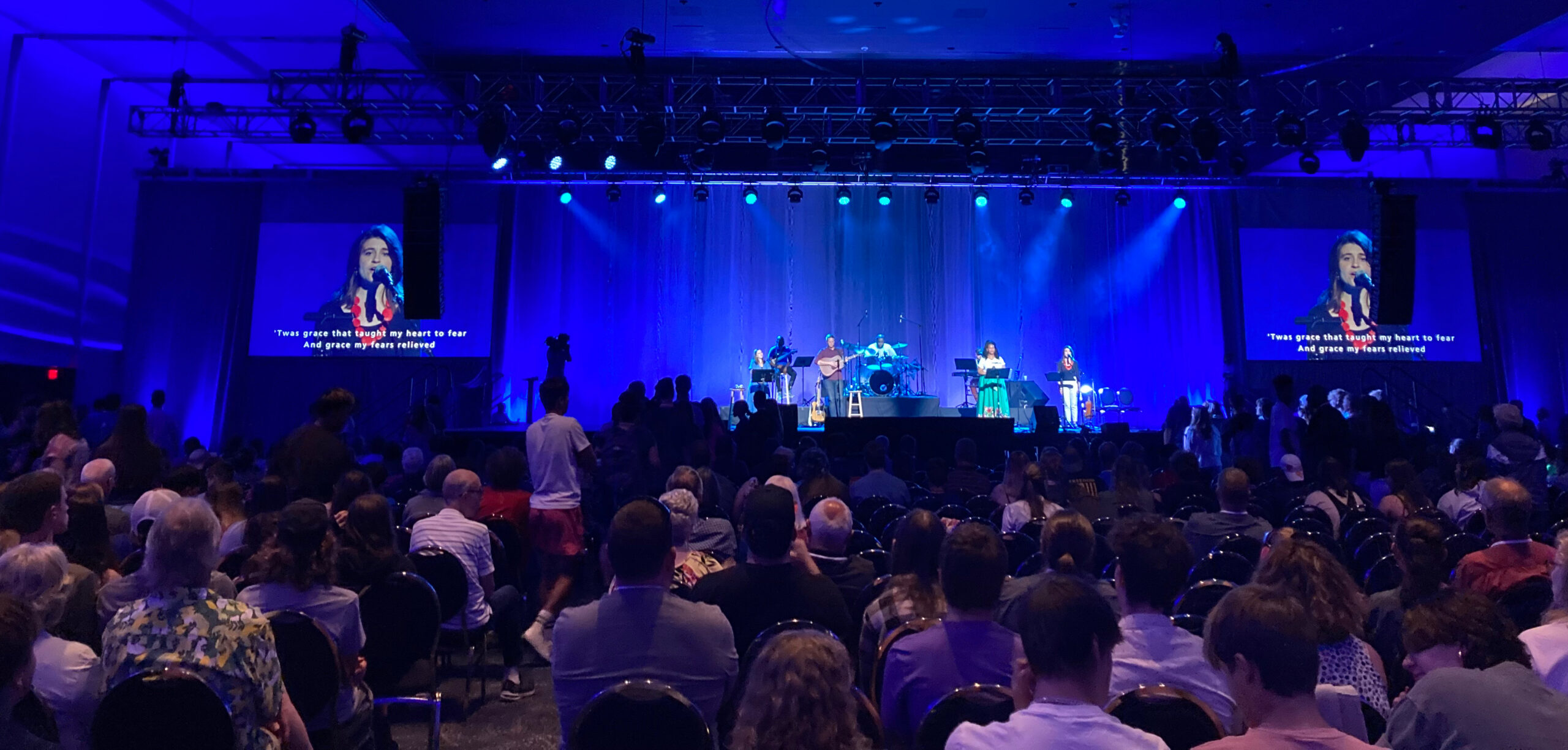
- Raised platform area for presenters to be visible to audience, and wheelchair access to the raised area
- If the room is large, simultaneous video projection of the presenters
- Text captions of spoken words of presenters in near-real-time
Organizing and Preparing Volunteers and Accessibility Coordinators
- Questions to consider
- Will the coordinator be paid staff or a volunteer?
- What are the duties and expectations of the coordinator?
- Will the coordinator recruit volunteers or be given their names?
- Will the coordinator be responsible for training volunteers?
- Who will design the training? When will the training take place?
- How will volunteers be assessed for qualifications prior to the event?
- Background checks should be required if volunteers are working with children or vulnerable individuals
Orienting Attendees to the Event and Meeting Spaces
- Use Volunteers/Accessibility Coordinator
- Provide Descriptive Information
- To help orient attendees who are blind or have low vision to the meeting location, it may be useful to provide some descriptive information and give a “walkthrough” of the event space
- Include “big picture” information: the layout of the facility and surrounding area, including landmarks and their relation to each other
- Include “small picture” information: the location of the coffee pot, telephone, toiletry products, and the thermostat in a hotel sleeping room, for example
- Include specific directions for getting to and from one area of the meeting place to another. For example, directions from the lobby, elevators, stairs, or other common “starting points” to specific meeting rooms, restaurants, or other spaces
Information for Presenters and Speakers
Information for Audio Support
Children’s Activities
If Children participate:
- Create opportunities for clear communication between children’s leaders and parents
- Brief all children’s leaders on the support needs of disabled children before the event. Provide leaders with vocabulary and ideas of discussing disabilities with child participants.
- Provide a “Quiet Space” or “Sensory Room” to de-stress from over-stimulation. This is not intended to be a “Time-out” or punishment.
Programming needs for children
- Fun/Play opportunities
- Adequate supervision
- Two adults always present with minors
- Provide a 1×1 ratio of adult-to-child with a disability, as needed
- Find teachers or paraprofessionals to volunteer
- Follow “Safe Church” policies (Click here for Mennonite Church USA Safe Church website)
- Parent/Guardian release forms
- Safety considerations
- Common disabilities:
- Intellectual disability
- Emotional disabilities and Trauma
- Autism
- Physical disabilities
- Deafness and hard of hearing
- Blindness and low vision
- Outside Resources: