Practices for Resilience
by Jeanne Davies
We are living in a stressful time – a time of pandemic, economic stress, and social unrest. It seems that everything has changed and so much is uncertain. People with disabilities and their families are worried about staying safe and staying healthy. Routines have been disrupted. Many are juggling work, childcare, and online school. It has been described as a collective trauma. For some people, that resonates with past trauma, deepening the stress.
When experiencing traumatic stress, we can become hyper-aroused (feelings of anxiety, anger, being overwhelmed) or hypo-aroused (frozen, numb, depressed, exhausted). In either of these states we find it difficult to think clearly, to make good decisions, to learn, and to connect with other people.
I recently attended a webinar on fostering resilience in ourselves and others, led by Elaine Zook Barge and sponsored by Eastern Mennonite University at Lancaster. Resilience is the capacity to bend and not break, to be strong but flexible. It is the ability to bounce back and to adapt under stress.
There are many ways to foster resilience, and several were presented in the webinar. Trauma triggers our nervous system and is held in the body. Somatic practices that engage our body can often be helpful in stepping down our stress response. If we use these practices regularly, they can increase our resilience in general.
The Attachment and Trauma Treatment Centre for Healing offers the following practices.
For decreasing arousal (calming tools):
- Deep and slow tummy breathing
- Drinking from a straw
- Throwing a ball at a wall
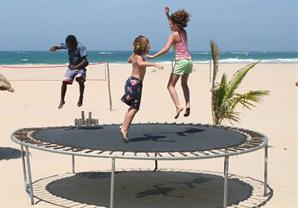
- Jumping on a regular or mini trampoline
- Weighted blanket
- Warm water
- Shaking or stomping out excess energy
- Heavy work (lifting, pulling, pushups, crab walk, etc.)
- Music (soothing and calming music or sounds)
- Comforting food
For increasing arousal (activation tools):
- Anything that stimulates the senses
- Smelling essential oils
- Chew crunchy food
- Movement
- Jumping on a regular or mini trampoline
- Rocking chair
- Weighted blanket
- Finger painting
- Water play with a straw (blowing through a straw)
- Dancing and music
These practices all work differently for different people. We can try several and then use the ones that work best for us.
We can also foster resilience in one another. Resma Menakem writes: “Our bodies guide and follow other bodies; a settled nervous system encourages other nervous systems to settle.” Menakem suggests practices we can do together:
- Hum
- Hum and touch (hand to the base of the skull)
- Sing
- Rock back and forth
- Rub our belly or chest (each person rubs their own)
- Walk and synchronize our steps
- Stand and breathe quietly
As Christians, we have particular practices rooted in our faith that can help us be resilient. We can pray. We can sing hymns or praise songs. We can go on a prayer walk in our neighborhood, giving thanks and raising concerns to God. We can sit quietly, focusing on God’s loving presence and receiving God’s love. We can read Scripture aloud. We can do all of these Christian practices alone or together, helping one another foster resilience in ourselves and our communities.
May God bless us with resilience in this time. May it help us be more like Paul who proclaimed from prison, “I have learned to be content whatever the circumstances. I know what it is to be in need, and I know what it is to have plenty. I have learned the secret of being content in any and every situation, whether well fed or hungry, whether living in plenty or in want. I can do all this through him who gives me strength.” Philippians 4:11
References
- Eastern Mennonite University Continuing Education: https://emu.edu/lancaster/continuing-ed/past-offerings.
- Attachment and Trauma Treatment Centre for Healing: https://www.attachment-and-trauma-treatment-centre-for-healing.com/.
- Resmaa Menakem. My Grandmother’s Hands: Racialized Trauma and the Pathway to Mending Our Hearts and Bodies. Las Vegas, Nevada: Central Recovery Press, 2017.
Jeanne Davies serves as Executive Director for Anabaptist Disabilities Network.