Seeing With our Fingers
Making Church Accessible to Blind Worshipers
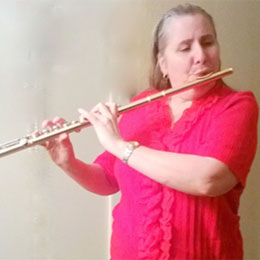
Natalie Dorion plays flute at Windsor Mennonite Fellowship in Windsor, Ontario
It’s Sunday morning and Natalie Dorion stands in front of the church, playing her flute. Her fingers flying, she quickly scans the song sheets with her hand as she performs a stirring solo. Natalie then goes to the pulpit and begins leading the congregation in worship. All of this would seem commonplace, the traditional motions of any weekly worship service, except that Natalie is one of three visually impaired regular attenders at Windsor Mennonite Fellowship, a congregation of about 30 people in Windsor, Ontario.
Every week, Natalie comes to church, women’s Bible study, and other weekly activities. Although born blind, this does not stop Natalie from participating in various ministries in the church: from helping with crafts in the summer Vacation Bible School, to leading worship, to energetically participating in a prayer meeting. Through these activities, Natalie refuses to allow her physical disability to interfere with her social and spiritual life. Over the years, Natalie has also become a dear friend of mine, and as we have conversed and attended church together, she has begun to teach me more about what worship means to her and the unique challenges congregational life brings to someone with a visual impairment.
Of paramount importance to Natalie and others who are blind is attending to certain practical aspects of ministry. As a seminary student, I can attest to how easy it is to focus on the mechanics of a good sermon or the flow of a good worship service, all the while forgetting that maintaining the steps during the winter, fixing the dimming lightbulb, and removing cables and cords left lying on the floor are equally necessary for someone who is blind. In fact, when it comes to critiquing worship, a blind person is likely to focus less on the theology being espoused than on the building being difficult to maneuver or the potluck being inaccessible.
A second consideration when planning a worship service for the visually impaired is that many individuals who are blind do have some level of sight; because of this it is imperative that churches maintain adequate lighting and have large print hymnals available. For example, churches should exercise caution when having Christmas Eve Candlelight Services, and orally describe any visuals being used. Doing simple actions like these help bring awareness and hospitality to the blind population and foster accessibility and inclusion.
As I reflect on all that Natalie has taught me, I am reminded that we need to make church an accessible place for all of God’s children. We need to make sure that we attend to even tiny details in order to offer hospitality for people who have disabilities who may come into our midst. When this happens, church can truly become a loving experience where fingers fly, hearts join together in love, and Christ is honored.