Sensory Room
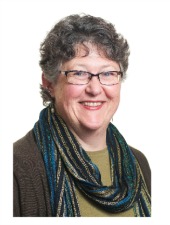
by Deborah-Ruth Ferber
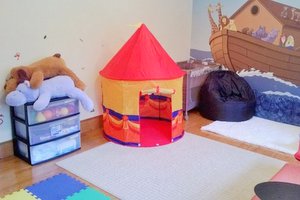
View of sensory room at Willowdale Church, Toronto
Growing up can be hard, but when you have a developmental disability it can be even harder. This summer, I got to make one small part of life easier for a few children with developmental disabilities. I had the privilege of participating in a joint internship with Willowdale Pentecostal Church (where I have served as an intern for the past year) and Anabaptist Disabilities Network. Willowdale Pentecostal is a growing and thriving church in Toronto, Canada. Home to a very racially and economically diverse congregation, Willowdale also hosts a vibrant children’s ministry program.
The main goal of my internship was to work within this structured children’s program to come up with innovative ways to include and support the children in our church who have various developmental challenges. Although I have worked with adults who have developmental disabilities for the past two years, this was my first time primarily addressing these challenges in children, so it proved to be a very fruitful and eye-opening experience for me.
One of the major projects I undertook as part of this internship was the creation of a sensory room designed for toddlers between the ages of two and five. Sensory rooms have recently gained popularity in a variety of settings as being calming and educational spaces that promote choice and the dignity of each individual who uses them. Sensory rooms in special education daycare centers, hospitals, and nursing homes have proven to be beneficial for people with developmental disabilities, dementia, and certain types of behavioral issues.
At Willowdale, we had around five children on the autism spectrum or who have behavioral challenges such as Attention Deficit Hyperactivity Disorder (ADHD) and Oppositional  Defiance Disorder (ODD). Part of my task for the summer was to create a positive learning space for these children when the standard classroom setting did not seem to be working. A team comprised of myself, another Christian education intern, and the children’s pastor worked hard to ensure that this room would not be experienced as a punishment nor a reward for misbehaving, but rather a calming place to rest and relax.
Thanks to ADNet’s generous assistance* and contributions from an anonymous donor, we were able to create a room that was inviting and appealing, and that the kids loved! After the creation of the room back in early June, it has been used frequently and the church has seen a decline in the number of behavioral incidents that have taken place during the Sunday School hour.
We recognize that we will never fully be able to eliminate all the “growing pains” of childhood, but we firmly believe that it is best to minimize them as much as possible. It is exciting to see this room now as a reality for our kids!
For more ideas on equipping a sensory room, visit The Inclusive Church.
- When space is limited, consider a mobile sensory wall
- Ideas for a quiet room
- Ideas for a sensory room
* * * * *
Deborah-Ruth Ferber is a Field Associate for ADNet. She recently completed her Master of Divinity degree and is now working as a live-in assistant for a L’Arche community in Edinburgh, Scotland.
*ADNet provided scholarship assistance to Deborah through our Student Associate program. Deborah has been volunteering with ADNet as a contributing writer since 2013.