A Couch for Miriam, A Couch for All of Us
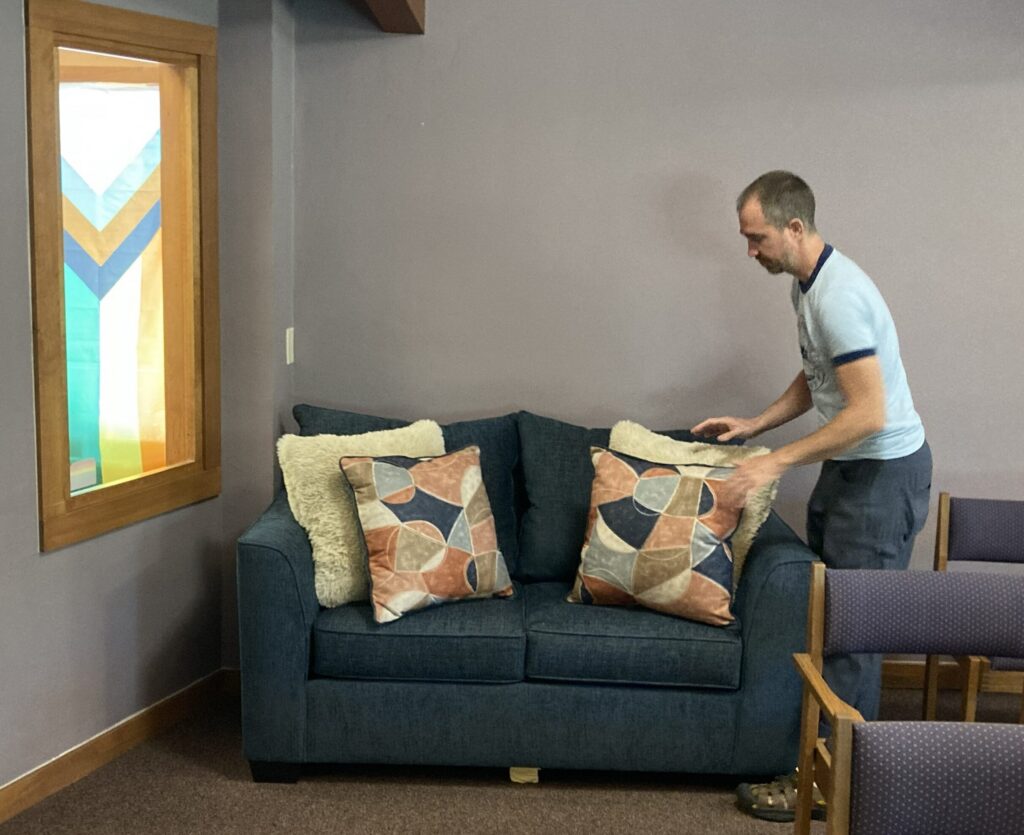
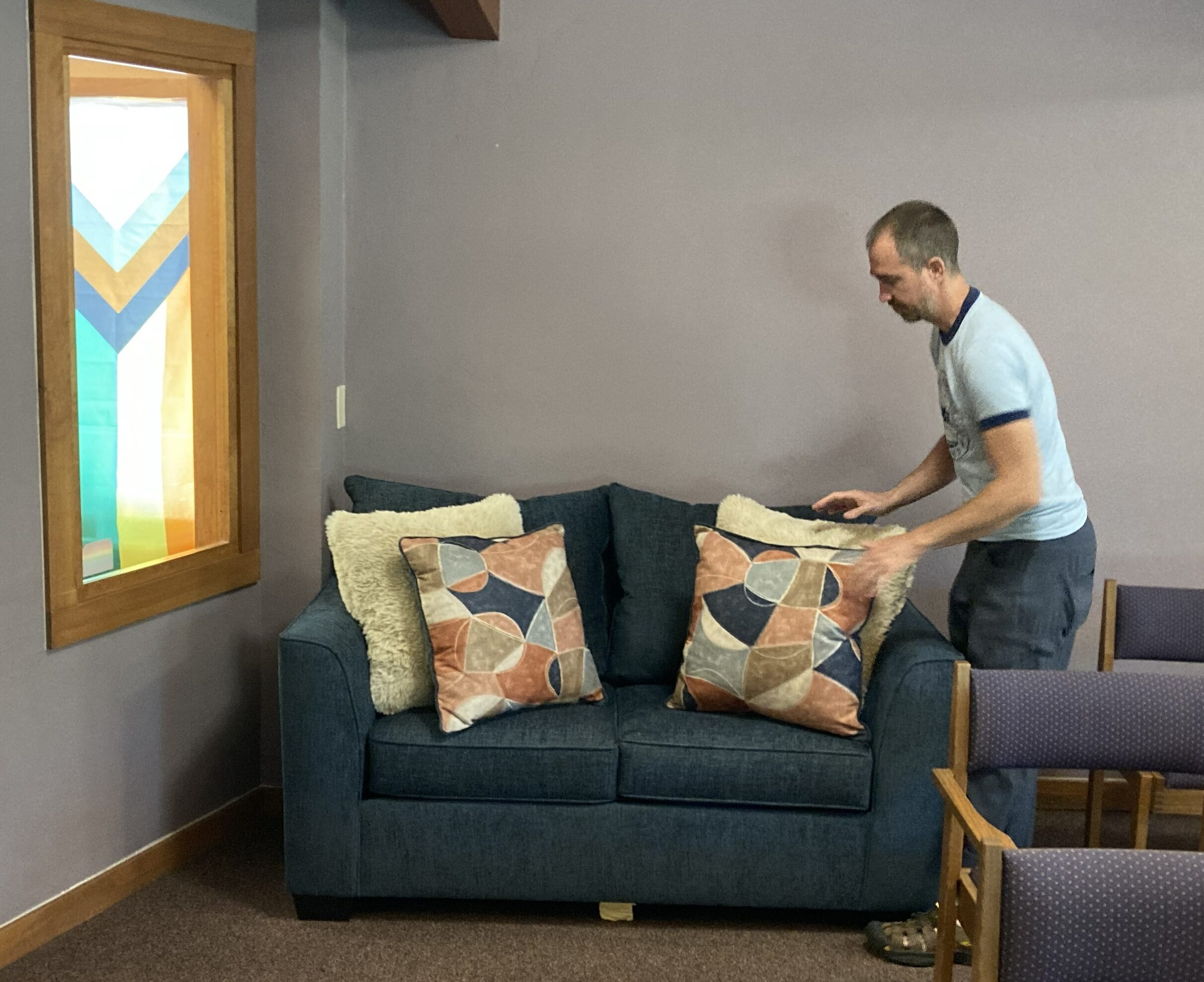
Justin Shenk setting up the new couch in the sanctuary, August 2026.
by Joanne Juhnke
My daughter Miriam joined the worship service in person for twenty minutes the other Sunday.
In and of itself, that doesn’t sound very impressive, twenty minutes out of an hour-long service, what’s the big deal?
But then add the context: we hadn’t figured out how to have this young woman successfully attend a worship service since before the pandemic!
Miriam has been a welcome part of the Madison Mennonite Church (Wisconsin) community since her birth in the summer of 2004, dedicated in the presence of family and the congregation that fall. She received several major developmental disability diagnoses before the age of three, including autism and epilepsy, such that she lives in the world very differently than her mother does – though we share a playful sense of humor and determination and all the love!
She has taught me so very much in her being and growing, to the extent that I made a career switch from working as a librarian to becoming a disability advocacy so I could help others through all that I’ve learned and continue to learn.
When Miriam was young, she was willing to sit on the regular chairs with me during the service, as long as she could have her iPad and a great big lollipop. When she got older, we had a rotating schedule of volunteers from the congregation who helped accompany her in worship and Sunday school, and eventually we were able to access state funding to hire companions to be with her in whatever part of the church building she was willing to hang out.
After being out of the rhythm of attending worship while the pandemic closed the building, though, the physical space of the sanctuary just wasn’t working for her anymore.
Meanwhile, MMC created a new written expression of our Core Values, including one on expansive inclusion: “We affirm and celebrate the image of God in all people. We strive to create a community of welcome, belonging, and accessibility for all, including people who identify as LGBTQIA+, and people of all races, ethnicities, classes, abilities, genders, faith journeys, and ages.”
In the spring of 2024, I had the opportunity to preach on the “all abilities” piece of what expansive inclusion means to MMC, for which I sought input from other members who themselves are impacted by disability. One response I found particularly powerful was, “Expansive inclusion to me means changing the culture so accessibility isn’t seen as something special we do for a few people, but something that benefits us all.”
The way that accessibility benefits us all is easy to see in something like taking care to speak into the microphone, which is useful not just for folks with hearing loss, but anyone attending by Zoom or listening from the nursery or the narthex. But it’s a bit more of a culture shift to think about making accommodations where the benefit is specific to one individual while the rest of the congregation is enriched simply in the solidarity and the fact that the individual can be present and comfortable. The radical nature of that proposed shift was apparent in the email messages I got from more than one person who mentioned that they wouldn’t want to impose on people for the level of accommodation it would take for them to participate in particular church activities.
Practicing what one preaches is not always easy! The idea that Miriam might be better able to participate if we improved the seating was something that we’d had some success with when she was smaller, such that our family at one point bought a child’s armchair that could be moved in and out of the sanctuary as needed. But she eventually outgrew that chair, and our next thought about furniture was a much bigger one. Her favorite place at home is on the couch with her feet tucked between the cushions. A couch is a bigger and more permanent investment though, in money and space. It would need to be approved by both congregations that share the building. And what if Miriam declined to use it, after all that?
I didn’t feel comfortable pursuing the ask, until the All In grant came along.
Once there was an entire committee deliberating on expansive inclusion across abilities and across the lifespan, and there was funding available to pursue those aims, I was able to overcome the hesitation barrier. I managed to find a loveseat in a compatible color that fit the space and that we could get approved by the right folks in the other congregation, and that Miriam seemed happy with in the furniture store (happily tucking her feet between the cushions just like at home).
Even if she were never willing to sit on that couch for worship, it would still be a useful alternative form of seating for those who prefer something softer or cozier, in either congregation.
But the very first Sunday that the couch was set up in the designated space, Miriam was willing to take in 20 minutes of the service with me, and bounce along to the hymns, and echo a countdown-from-five that was part of the children’s time. It was an extra delight to have visitors from the All In grant to witness and document the success!
My daughter Miriam joined the worship service in person for twenty minutes the other Sunday, and I am overwhelmingly grateful.
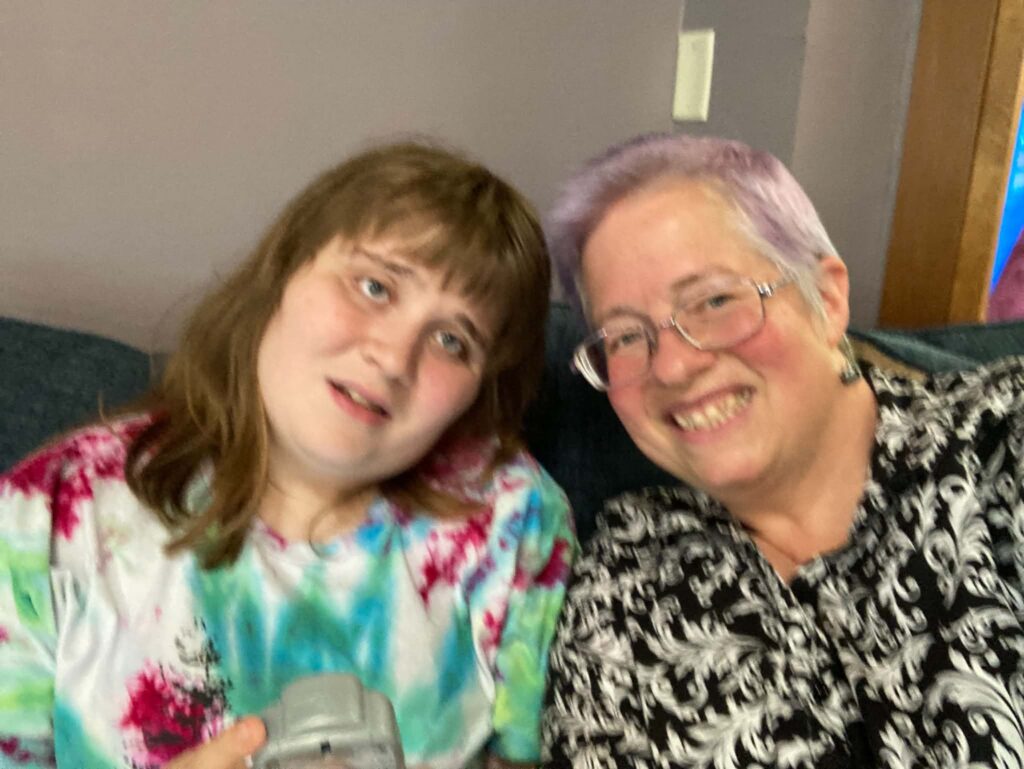
Miriam and Joanne on the couch during the August 23 worship service.
Joanne Juhnke is the mother of two daughters, one of whom lives at home (Miriam Oakleaf, age 22). Joanne is on the All In! committee at Madison Mennonite Church (MMC) and works as an advocacy specialist at Disability Rights Wisconsin. MMC has been “home” for her family since 1998.