Shifting Towards Inclusive Worship at Kern Road
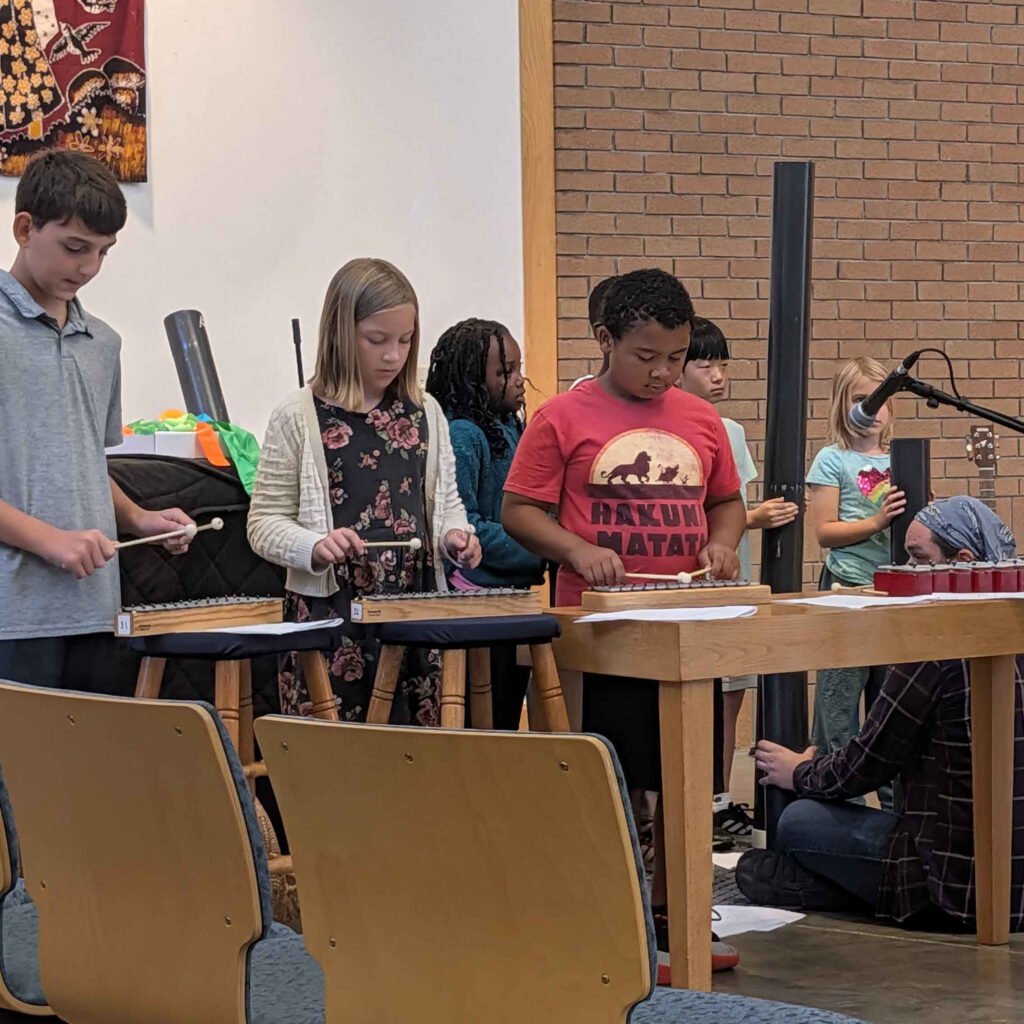
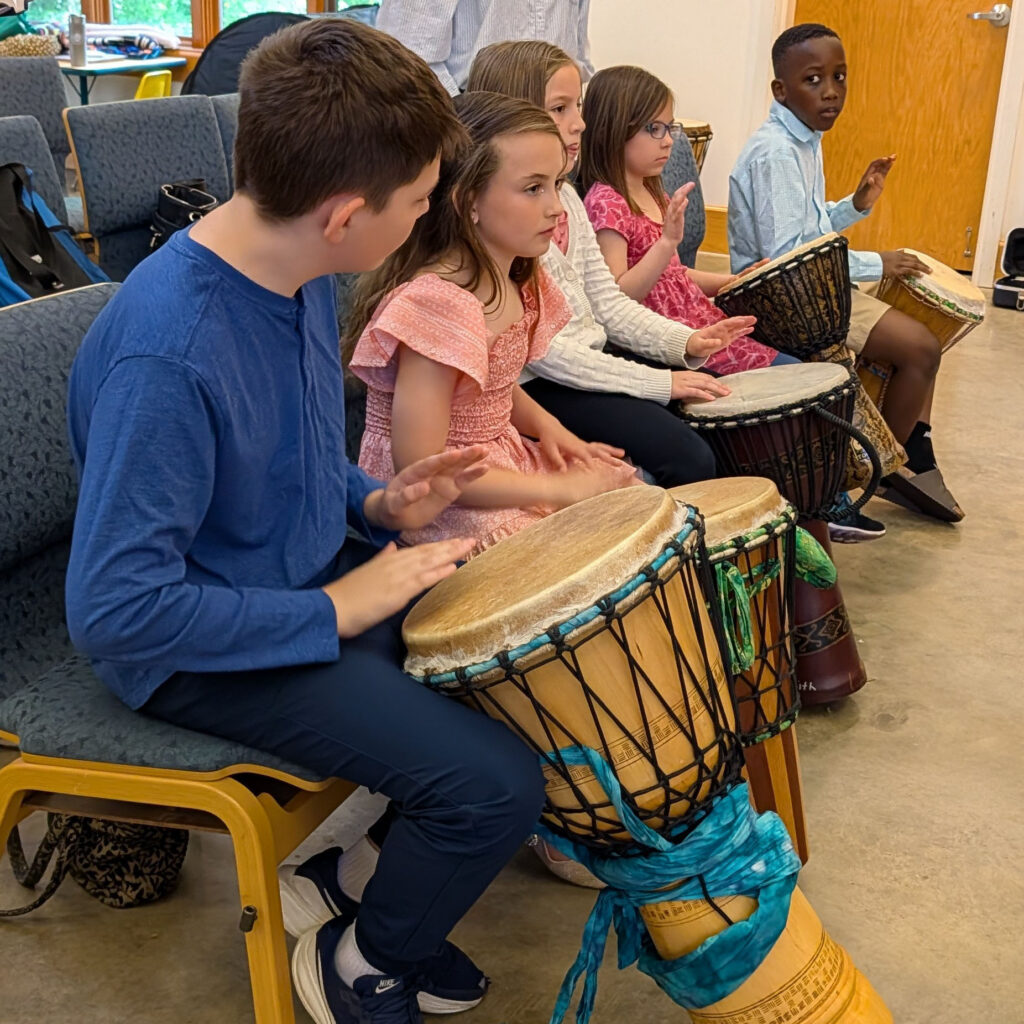
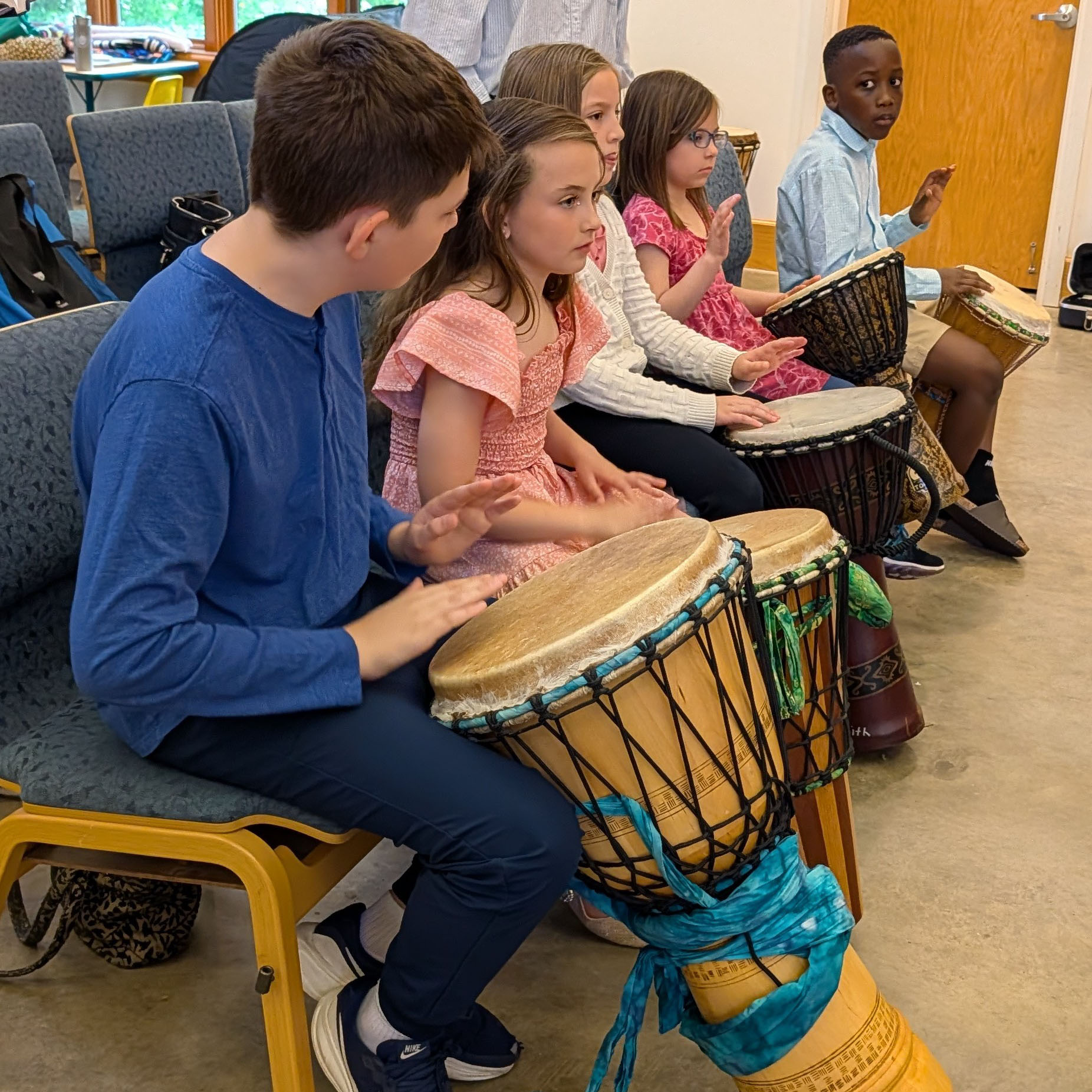
Above Left: Children playing glockenspiels during worship. Above right: Children drumming during worship.
by Deanna Waggy
Kern Road Mennonite Church (KRMC) in South Bend, Indiana is part of the All In project, and we have used our participation in the program to build on the momentum that began two years earlier as we sought better ways to include “neurospicy” kids and other worshipers with diverse needs into our regular worship time.
One of our ongoing traditions is offering a Montessori-based Young Children’s Worship program for ages 4 through 2nd grade during the part of the year know as Ordinary Time, which helps children learn the pattern and rhythm of worship, while all ages are together in worship during Advent and Lent. We have activity bags available (filled with snacks, coloring books, and fidgets for younger children), but those are used less these days, now that we’ve added art response tables in several spots around the sanctuary. Earlier this year, the leaders of Young Children’s Worship led the entire congregational worship service, so that everyone had an opportunity to experience the sensory-rich format in that program. The scripture was told using wooden figures and children helped lead familiar songs with hand motions. This service was a great segway into educating the congregation about the small sensory-rich changes we are making in our regular worship through the All In project.
Small, Steady Shifts Instead of Big Changes
Rather than overhauling our worship structure, we’ve woven in small, inclusive moments throughout the service that are intended to include younger attenders and those with intellectual disabilities. We continue to experiment with creative prayer responses and scripture readings. On Pentecost Sunday, for example, children and adults joined a dramatic group reading by playing “wind” instruments, waving flame-colored scarves, and reading scripture aloud in multiple languages while the worship leader tried valiantly to read the passage over the joyful chaos. It was a Pentecost none of us will forget.
Our pastors now regularly include a visual or story in the sermon geared toward children and beginning readers. When we use liturgy, the congregational responses are kept simple enough for early readers to join in confidently. Each week, at least one song offers a movement option with scarves or rhythm instruments, which both children and adults are invited to use. Outside of worship time, our 2nd through 5th graders are learning to accompany songs using drums and glockenspiels, preparing them to help lead songs in worship. During our spring baby dedication Sunday, worshipers of all ages took part in a “bubble blessing,” blowing bubbles together as the congregation read a prayer response over the families.
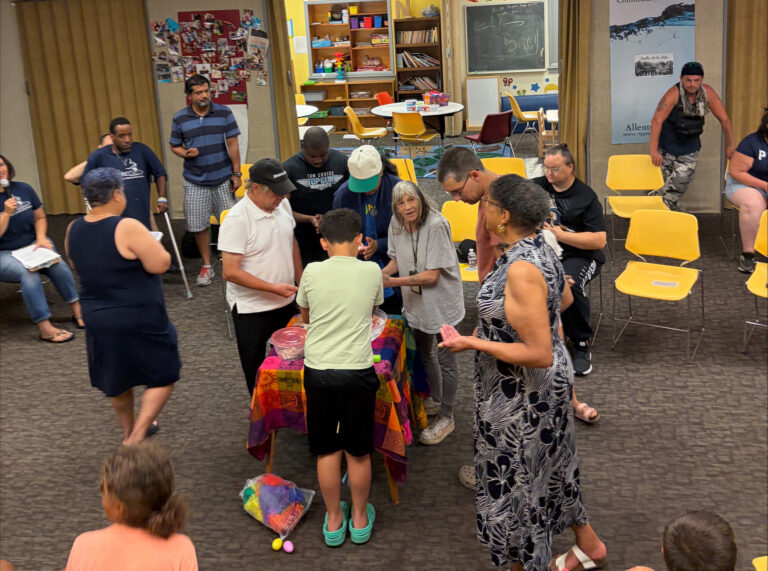
Once a month over the summer, we built in a 20-minute interactive response time during the service. Everyone has the option to join one of three scripture-response stations centered around music or dance, visual arts, and contemplation. When the groups return, someone shares briefly about their experience from each group. It’s become one of our favorite summer intergenerational rhythms, even if it is outside the comfort zone for some people.
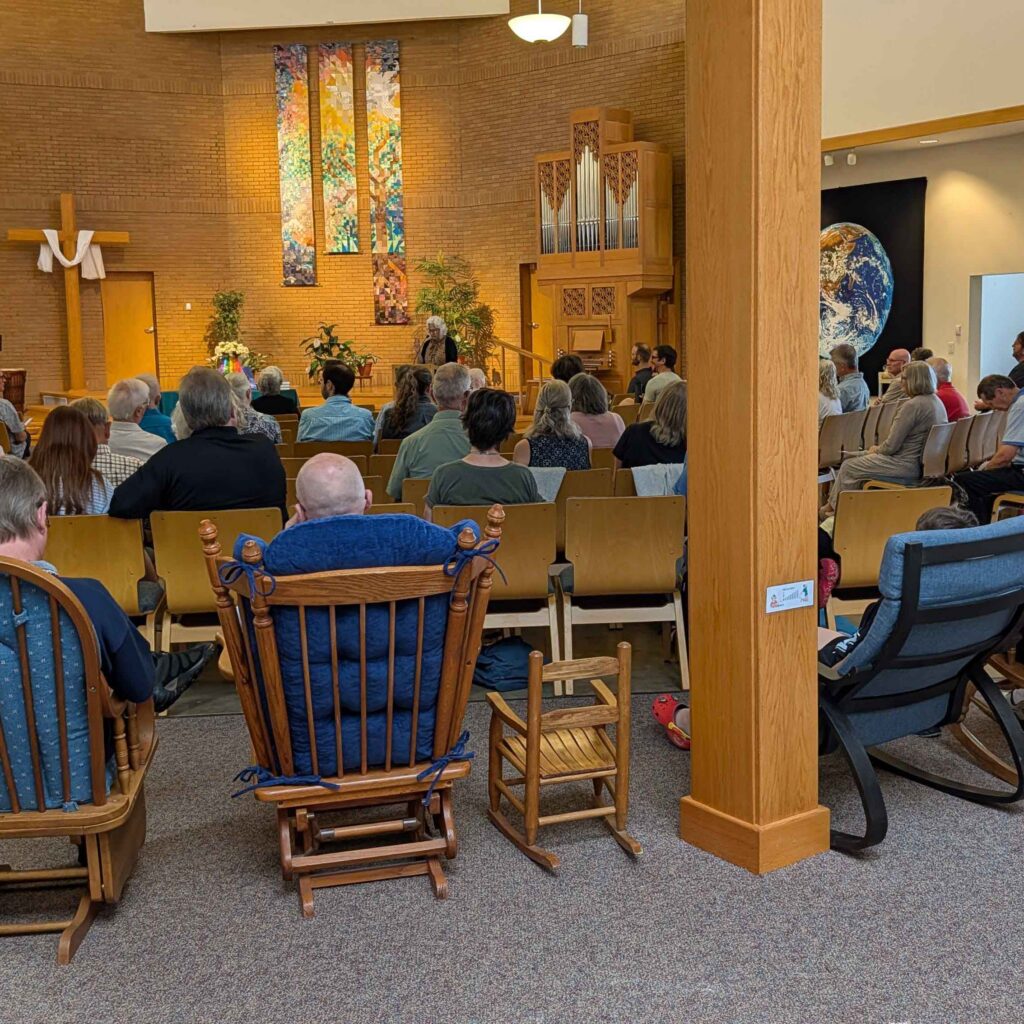
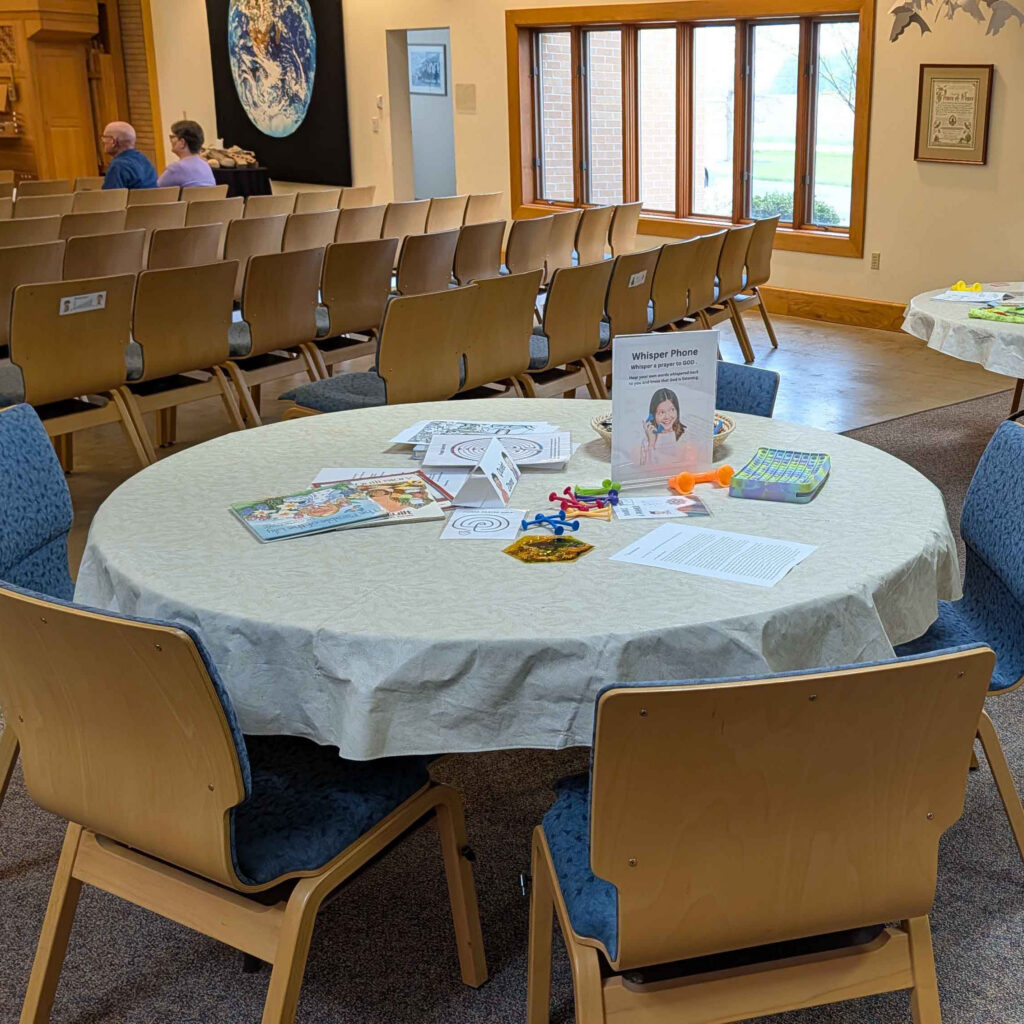
Above left: An assortment of rocking chairs at the back of the sanctuary. Above right: One of the art response tables with materials to use during worship.
Reshaping the Space Itself
We’ve also made physical changes to the sanctuary. Additional rocking chairs, in a range of sizes, now sit on the carpeted area behind the pews and are used every week. We recently added standing café tables near the back for those who prefer to stand or need movement during worship. Our art response tables now include laminated finger labyrinths, whisper phones, playdoh prayers, peace-themed coloring books about the life of Jesus, and scripture cards worshipers can color and take home. And near the floor, at eye level for our youngest worshipers, we’ve posted “You Are Here” signs alongside a volume-control graphic, with an arrow pointing to the quiet end, gently reminding everyone that this is a quiet, welcoming space.
None of these changes happened all at once, and none required rebuilding our worship service from scratch. Taken together, though, they’ve made KRMC a place where everyone of all ages, sizes and abilities can participate in worship in a way that fits how God made them.
Deanna Waggy has a private practice in South Bend, IN, where she integrates her training in Occupational Therapy, Spiritual Direction. and Bodywork to empower whole-being health. She is the Team Leader for the All In Project at Kern Road Mennonite Church, building on a strong foundation of faith formation within the congregation.