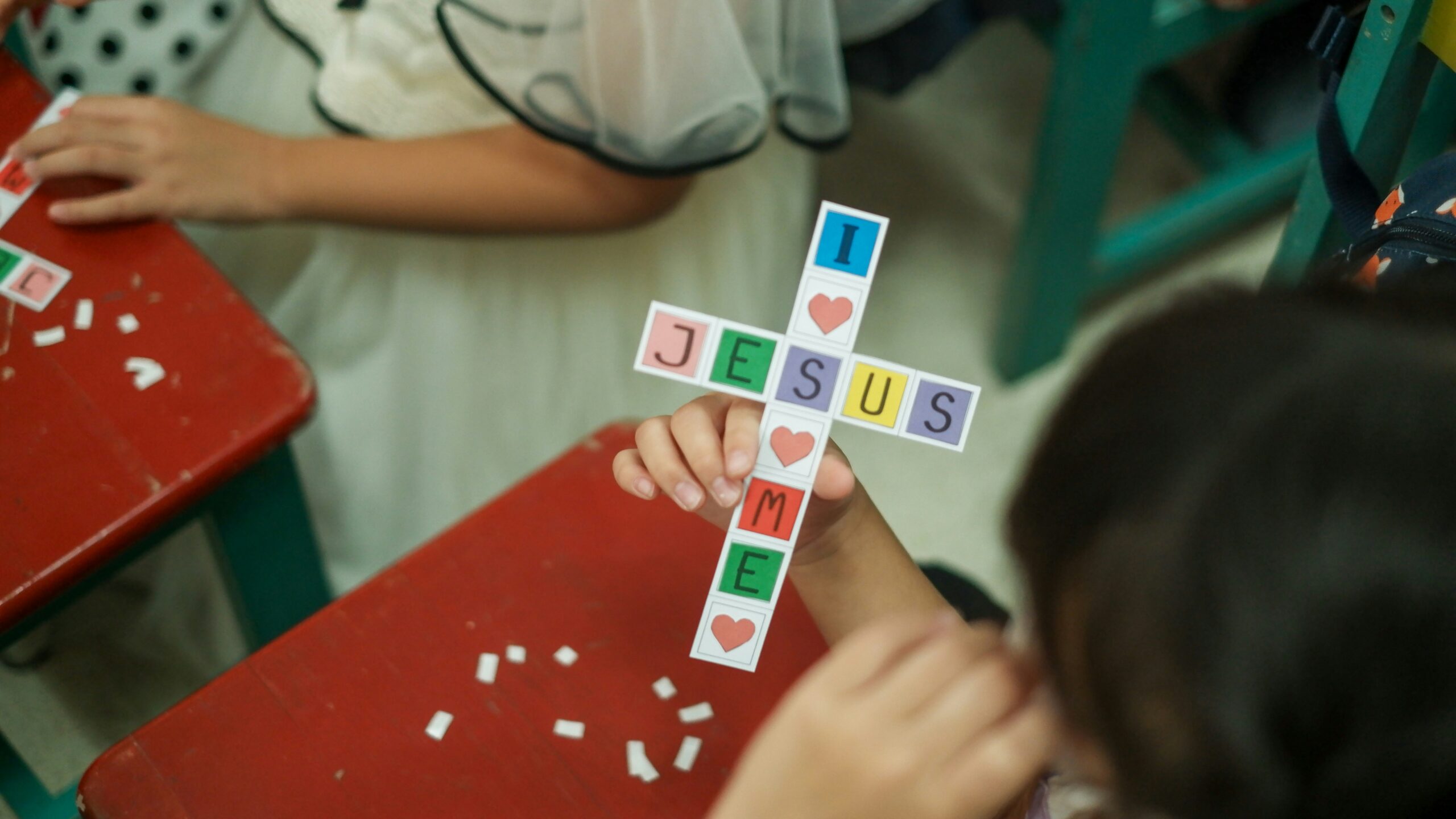
Faith Formation for Students with Disabilities
Tracey Lehman (TL) is a member of Columbus Mennonite Church (OH) and the mother of two young adult sons with Down syndrome. Communications Director Sarah Werner (SW) recently sat down with her to talk about her experience with the religious education programs her sons participated in when they were growing up.
SW: What was religious education like at Columbus Mennonite Church for your sons as they grew up in the congregation?
TL: At the beginning of each year, I would give the teachers information on the boys, ways they learn best, and things the teachers could do to help the boys participate. When they were younger, the boys were already doing activities with a lot of visuals and hands-on activities. But I also told the teachers that it really helped to have good structure and routine, and how making visual schedules helped the boys to know what would happen next.
For story time, it helped if they had things they could handle or look at, such as little wooden figures to illustrate the stories. As they got older, one of the Sunday school teachers ordered the curriculum for younger children because it corresponded to the group’s curriculum and had easier text and pictures. Another teacher created a binder with pictures that could be used to create a Bible story by sticking them on the page with Velcro.
Teachers and Christian education committee members were often proactive in asking what the boys needed and then putting it into practice. One example of this was that our younger son had several adults over the years who were his buddies during Sunday school and who could take him for a walk in the halls when he got too rambunctious.
As the boys got older, the classes became more abstract with a lot of talking and listening. The youth Sunday school teacher provided easier worksheets with pictures and simple text for the boys to use that corresponded with the discussion topic each week. He also included a hands-on activity each week for all the youth, which was helpful for the boys.
SW: What was most meaningful for them in religious education?
I think they liked Bible stories because they’re more concrete and easier to understand than abstract theological concepts. They also loved music.
SW: Is there anything that didn’t work or could have worked better?
One thing we tried with our younger son when he was in high school was to pair him with another student during class. We wanted someone who would be a friend and could make sure he was included. A youth sponsor asked the high schoolers to volunteer, and several kids did. But it fell apart because we needed to train them, and we didn’t think to do that. So in hindsight, I would have provided training for peer buddies.
Tracey Lehman works at a native plant nursery and she is a shared-living provider. She lives with her husband and two younger sons in Galena, OH.