Cripping Youth Ministry
Book Review
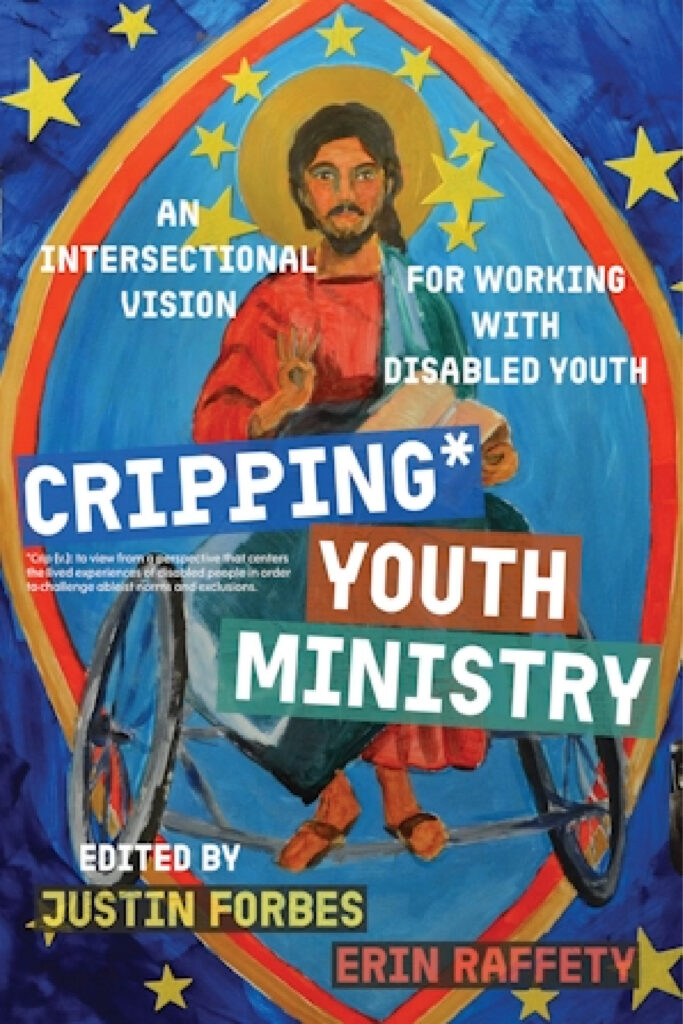
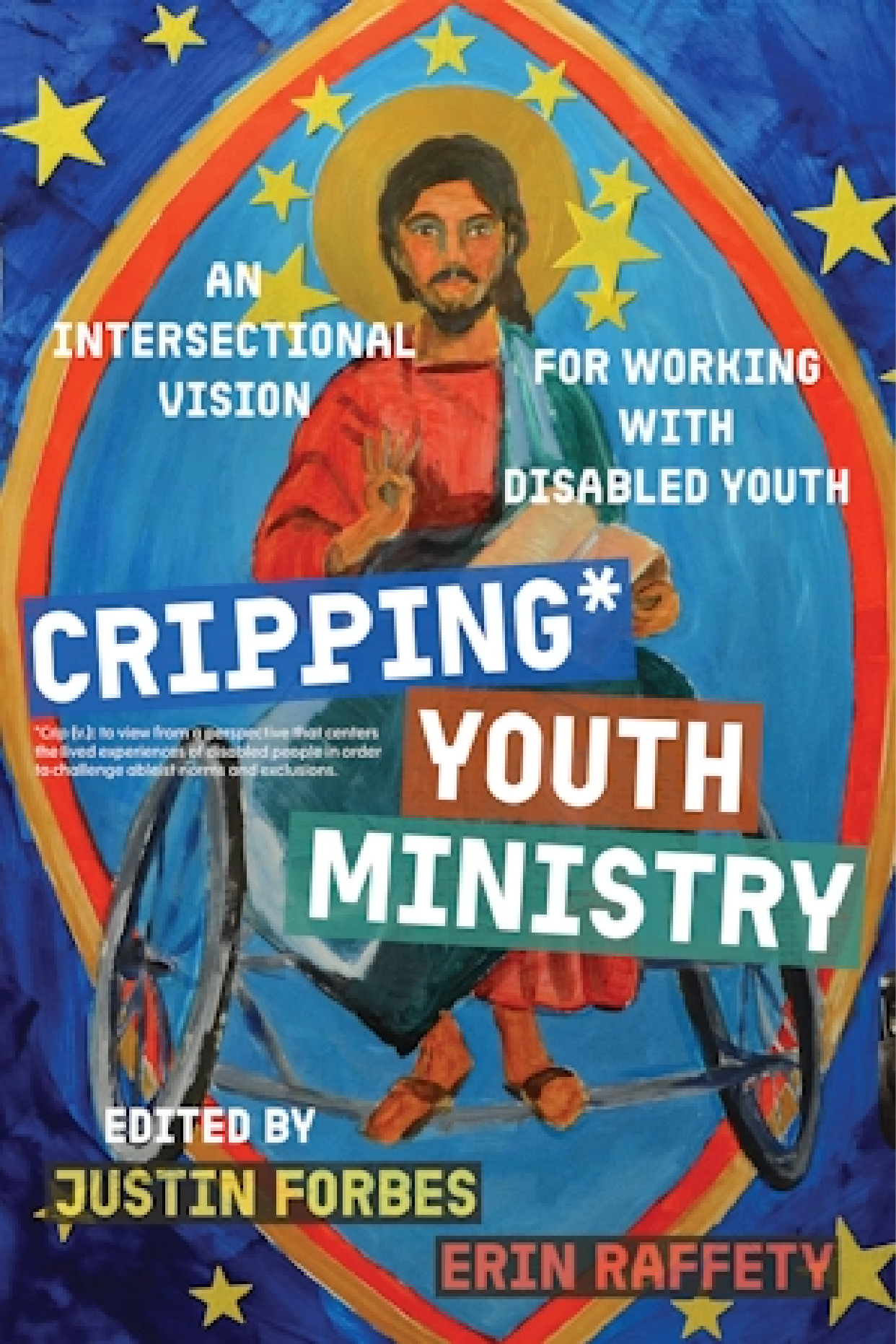
Cripping Youth Ministry: An Intersectional Vision for Working with Disabled Youth, edited by Justin Forbe and Erin Raffety (Eerdmans, 2026)
by Sarah Werner
Cripping Youth Ministry is a much-needed addition to the field of youth ministry that centers disabled voices and provides practical tools for doing ministry with rather than for youth with disabilities. It includes art created by youth with disabilities, and this collaborative nature of the work is demonstrated in the Introduction to the book, which is a transcript of a roundtable discussion of seven collaborators, including several young adults with disabilities.
The verb crip is explained in a tiny note on the cover as “to view from a perspective that centers the lived experience of disabled people in order to challenge ableist norms and exclusions.” In the opening pages of the book, the editors make clear that “disabled young people already carry wisdom, creativity, leadership, and theological insight,” and as such should have a voice in any youth ministry program for them (xi).
Cripping Youth Ministry is organized into four parts: lament, protest, praise, and prophecy. Each part contains a prayer or other piece of liturgy as well as an educational essay on a concept in disability theology. The book also includes a glossary defining key terms from disability studies, and a list of resources for further study. The articles are written by disabled scholars, pastors, and young people. Some are academic in tone, while others are personal narratives. They cover a wide range of topics including neurodiversity, disability justice, disabled BIPOC youth, vocation, and ableism. Each article includes reflection questions and several also include a practical tool that can be used by those working in the field of youth ministry to design programming that includes and honors the perspectives of youth with disabilities.
One of the most meaningful articles for me was the essay, “How I Become the Head Pastor of My Church Someday” by Chris Larocque with Zach Grant. Grant and Larocque are co-founders of Bethlehem Inclusive Church. In the essay, Grant transcribes a series of conversations with Larocque, who has Down syndrome, about his pastoral vocation and his plan to become a head pastor with the same salary, office space, and benefits as other pastors. It is meaningful both because there are few first-person narratives from people with intellectual disabilities in disability theology and because it reflects a desire and a plan for Larocque to be recognized for the work that he does in the same way that neurotypical pastors are.
This is a hopeful and spirited collection of voices that those in youth ministry most need to hear. It is a great resource for pastors, youth ministry workers, and lay people who are seeking a vision of a more just and inclusive church.
Sarah Werner serves as communications director for Anabaptist Disabilities Network. She lives in Columbus, Ohio.